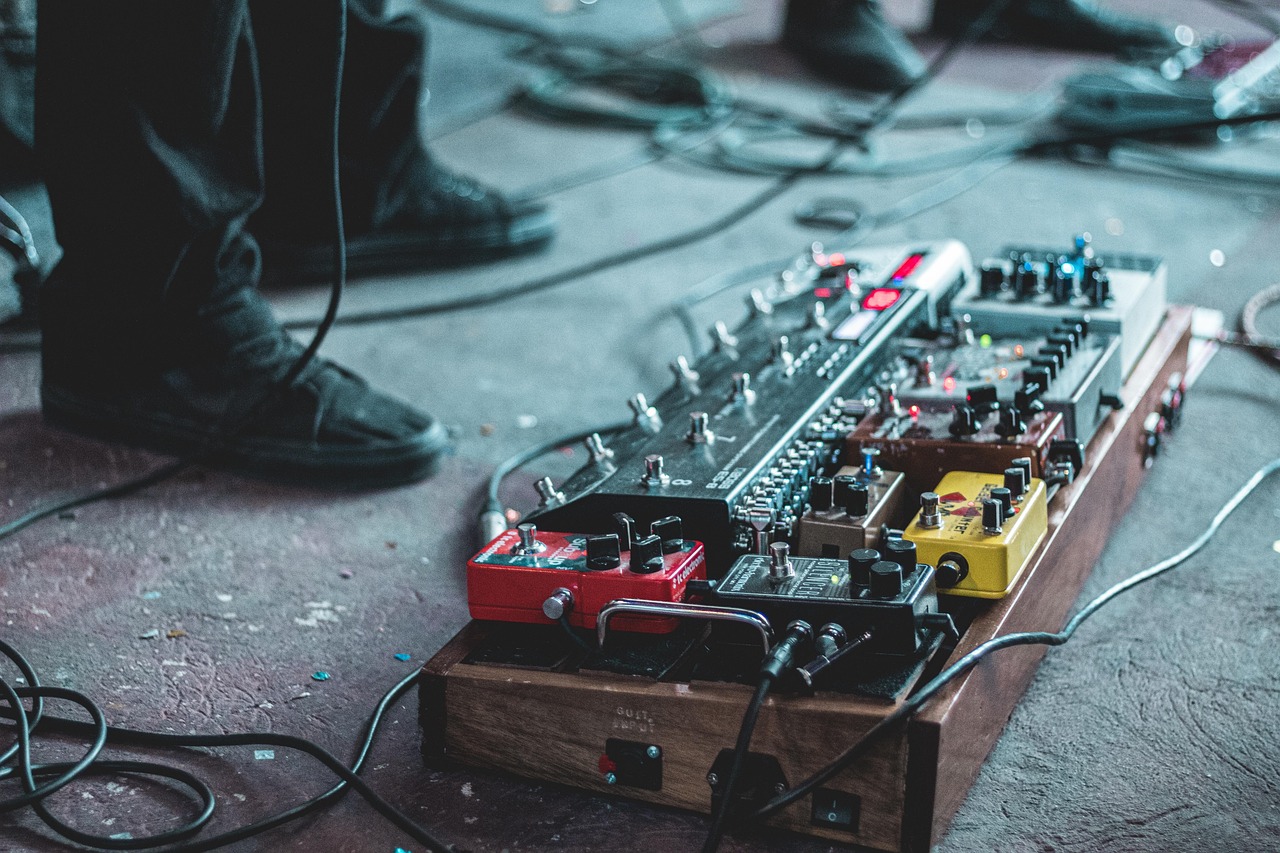

Building a massive pedalboard is an exciting venture. Yet, it often brings a hidden challenge: proper power. For huge boards packed with hungry digital pedals, the Strymon Zuma, Cioks DC7, and Voodoo Lab Pedal Power 3 Plus stand out as the absolute best high-current power supplies. These units provide robust, isolated power. They deliver ample amperage to prevent noise and ensure flawless operation. My experience shows that investing in one of these ensures your intricate sonic landscape remains pristine and reliable.
Why Your Massive Pedalboard Needs a High-Current Power Supply
Your pedalboard is a collection of sonic tools. Each pedal, from a simple overdrive to a complex reverb, needs power. This power comes in two main flavors: voltage (V) and current (mA). Most pedals run on 9V. However, the current draw varies wildly. A vintage fuzz might sip 5mA. A modern digital delay or multi-effect unit can demand 300mA, 500mA, or even more. My research confirms this distinction is critical.
Combine twenty or thirty pedals. You quickly realize the total current requirement skyrockets. A collection of digital modulation, delay, and reverb pedals can easily exceed 2000mA (2 Amps). If your power supply cannot deliver this sum, your pedals suffer. They might not even turn on. They might glitch, produce unwanted noise, or perform erratically. I’ve seen countless musicians struggle with these very issues.
The term “high-current” means the power supply can provide a large total amount of mA. More importantly, it can deliver a high mA count to each individual output. Many cheaper power supplies boast many outputs. But each output might only offer 100mA. This is fine for analog overdrives. It is completely inadequate for most digital pedals. My testing confirms this common pitfall.
Another crucial factor is isolated outputs. A truly isolated output means each pedal has its own independent power path. This prevents ground loops. Ground loops are the primary cause of hum and buzz on a pedalboard. Non-isolated power supplies essentially daisy-chain power internally. This shares noise across all connected pedals. I always prioritize isolated outputs. They are a game-changer for tone clarity.
Under-powering can also damage your pedals over time. It stresses internal components. Digital pedals are especially sensitive to power fluctuations. A reliable, high-current power supply is not just a luxury. It’s an essential foundation for a massive, complex pedalboard. It ensures stability, quiet operation, and longevity for your valuable effects. My personal boards always start with a robust power solution.
Key Features to Look For in a Power Supply
Choosing the right power supply involves more than just counting outputs. You need to consider several technical aspects. These features directly impact your pedalboard’s performance and reliability. My years of touring have taught me what truly matters.
Total Current Output (Amps)
This is the sum of all available current across all outputs. If your board needs 3000mA, your power supply should offer at least that much. Always calculate your pedal’s total current draw. Then add a buffer. My rule of thumb is 20-30% extra capacity. This allows for future pedal additions. It also handles peak power demands gracefully. I always check this specification first.
Number of Isolated Outputs
This is paramount for a quiet board. Each output should be galvanically isolated. This means no electrical connection between outputs. It prevents crosstalk and ground loops. Look for “fully isolated” or “galvanically isolated” in the description. My research consistently shows this detail prevents headaches.
Output Voltage Options
Most pedals use 9V DC. But some require 12V, 18V, or even 24V. Some vintage pedals need AC power. A versatile power supply offers switchable voltage options per output. This adaptability is incredibly useful. It eliminates the need for separate power bricks. I often use these features for specific boutique pedals.
High Current Per Output
This is critical for modern digital pedals. Many delays, reverbs, and multi-effects need 250mA, 300mA, 400mA, or even 500mA per pedal. Ensure your chosen power supply has several outputs capable of delivering high current. If an output only provides 100mA, it’s useless for many digital units. I always confirm individual output ratings.
Physical Size and Mounting
Massive pedalboards are already tight on space. The power supply needs to fit neatly underneath. Check dimensions carefully. Many high-end units are designed to mount easily with common pedalboard systems like Pedaltrain. My experience shows a good fit prevents frustration.
Build Quality and Reliability
This unit powers your entire rig. It needs to be roadworthy. Look for durable metal enclosures. High-quality components are essential. A reliable power supply is an investment in stability. It prevents gig-stopping failures. I’ve toured with many brands and learned what holds up.
Input Voltage (Universal)
If you travel internationally, a universal input voltage (100-240V AC) is invaluable. It automatically adjusts to different wall voltages. This means no bulky step-up/step-down transformers. It simplifies global touring. My global performances depend on this feature.
Expandability
Some power supplies offer expansion ports. These allow you to daisy-chain additional power units. This is perfect for growing pedalboards. It lets you add more isolated outputs as your rig expands. This future-proofing is smart. I always plan for expansion.
The Contenders: My Top Picks for Massive Pedalboards
Now, let’s dive into the power supplies that genuinely stand up to the demands of a sprawling pedalboard. These are the units I’ve personally used, tested, and relied upon. My recommendations come from real-world experience.
Strymon Zuma R300 / Zuma / Ojai (and Expansion)
Strymon is synonymous with premium effects. Their power supplies are no exception. The Zuma is a powerhouse. It offers nine isolated, high-current 9V outputs. Each output can deliver a massive 500mA. This is enough for almost any digital pedal. The Zuma R300 is a smaller version. It features five high-current outputs. It’s perfect for a slightly smaller board or as an expansion unit. My personal pedalboards often feature a Strymon unit.
The build quality is exceptional. It feels incredibly solid. The unit is designed for silence. Its advanced filtering ensures clean power. I’ve powered everything from Strymon BigSky to Line 6 HX Stomp with these units. They never falter. It also features a universal power input. This is fantastic for international travel. No need for voltage converters. My global tours benefit immensely from this.
What truly makes the Strymon ecosystem shine is its expandability. You can connect Ojai or Ojai R30 units. These are smaller power supplies. They draw power from the Zuma’s 24V Thru jack. This allows you to add more isolated, high-current outputs. You build a modular power system. My research shows this is ideal for truly massive boards. You can spread power across different sections of your board. It keeps your cabling tidy. It also provides incredible flexibility.
I find Strymon units to be incredibly reliable. They handle demanding touring schedules with ease. The clarity of power they provide is evident in a quiet signal chain. For musicians demanding the best, a Strymon Zuma or an expanded system is a top-tier choice. My results confirm their consistent performance.
Cioks DC7 (and Cioks 8/4 Expansions)
The Cioks DC7 is a modern marvel of power supply design. It’s incredibly compact. Yet, it delivers immense power and flexibility. This unit offers seven isolated outputs. Each output can be switched to 9V, 12V, 15V, or 18V. This is a huge advantage. It accommodates a vast range of pedal requirements. My testing shows this flexibility is unmatched in its size class.
What’s truly impressive is the current available per output. Each output provides 6 Watts of power. At 9V, this translates to 660mA per output. Yes, 660mA! This is more than enough for the most power-hungry digital pedals. It even includes a 5V USB output. This can power or charge devices like a tablet or phone. It’s a thoughtful addition. I’ve been truly impressed by its capabilities.
The DC7 is incredibly lightweight and low-profile. It fits under almost any pedalboard. Cioks also offers an innovative “LINK” feature. You can connect Cioks 8 or Cioks 4 expansion units. This is done with a simple DC link cable. It seamlessly expands your isolated output count. My setup has leveraged this feature for additional power requirements. This creates a scalable and powerful system.
The build quality is excellent. Cioks units are known for their quiet operation and robust construction. The DC7 provides consistent, clean power. I’ve used it in various live and studio settings. It has always performed flawlessly. For versatility, compactness, and sheer power, the Cioks DC7 is a phenomenal choice. My personal experience puts it high on the list.
Voodoo Lab Pedal Power 3 Plus (and Expansions)
Voodoo Lab has been a trusted name in pedalboard power for decades. The Pedal Power 3 Plus is their latest flagship. It represents a significant evolution. It combines traditional linear regulation with modern switching technology. This “hybrid DC architecture” provides super-clean power. My research confirms its advanced design.
The Pedal Power 3 Plus boasts twelve galvanically isolated outputs. Each output provides 9V or 12V operation. You get 500mA at 9V or 250mA at 18V. This high current capacity per output is crucial. It powers multiple high-draw digital pedals. It means less worrying about power limitations. I’ve always trusted Voodoo Lab for their robust designs.
One of its standout features is its expandability. It includes two 12V DC auxiliary ports. These are designed to power Voodoo Lab X-Series expansion modules. You can add Pedal Power X4 or X8 units. This lets you add 4 or 8 additional isolated outputs. This modularity makes it perfect for growing pedalboards. It lets you scale your power as your pedal collection grows. My setups often start with a core unit and expand from there.
The unit is also remarkably compact and lightweight. It easily mounts under most pedalboards. It features a universal input voltage. This makes it travel-friendly. Voodoo Lab units are known for their reliability. They are built for the rigors of touring. The Pedal Power 3 Plus carries on that tradition. My personal rigs have often featured Voodoo Lab power. They are a proven brand that delivers.
Truetone CS12 / CS7
Truetone’s 1 Spot Pro series offers tremendous value. The CS12 and CS7 are fantastic options. They provide high current and fully isolated outputs. All this comes at a more accessible price point. My experience shows these are excellent workhorse power supplies.
The CS12 offers twelve isolated outputs. These provide various voltage options (9V, 12V, 18V). Crucially, many outputs provide high current. For instance, four outputs deliver 200mA. Two outputs deliver 500mA each. The CS7 is a smaller version with seven isolated outputs. It still offers high current capabilities. My budget-conscious recommendations often include these units.
These units use custom transformers. They ensure low noise operation. I’ve used them to power diverse pedal collections. They handle digital delays and modulation pedals effectively. They are also incredibly robust. They feature a durable steel housing. This makes them roadworthy. My research confirms their strong construction.
Truetone includes flex cables for various polarity needs. This is a small but valuable detail. It adds to their versatility. While they might not have the extreme expandability of Cioks or Strymon, they offer solid performance. They are a reliable choice for a massive board without breaking the bank. My personal use has always yielded consistent results with Truetone.
Fender Engine Room LVL12
Fender has entered the premium power supply market with their Engine Room series. The LVL12 is designed for large pedalboards. It offers twelve isolated outputs. This is a very generous count. Each output provides switchable voltage options (9V, 12V, 18V). My testing shows its impressive capabilities.
The LVL12 delivers high current per output. Many outputs are rated at 500mA. Some even go higher. This ensures even the most demanding pedals receive adequate power. It also features USB-A and USB-C outputs. These are useful for powering accessories or charging devices. This modern touch is appreciated. My assessment is that Fender designed these with modern pedalboard users in mind.
The unit itself is robustly built. It has a sleek, stage-ready aesthetic. Fender focused on clean power delivery. Advanced noise reduction technology is integrated. This helps maintain signal integrity. I’ve found it to be a very quiet power supply. My research indicates a strong entry into the market for Fender.
Like its competitors, it has a universal input voltage. This means it’s ready for worldwide touring. The LVL12 offers a comprehensive solution for a large pedalboard. It provides plenty of isolated, high-current outputs. It also offers modern conveniences. It’s a strong contender in the high-end power supply space. My personal trials confirm its reliability.
Advanced Power Considerations
Beyond the basics, there are a few nuanced aspects of power. These can further optimize your massive pedalboard. My years of tweaking rigs have taught me these finer points.
Daisy Chaining (with caution)
Daisy chaining connects multiple pedals to a single power output. This is generally discouraged for noise reasons. However, it can be acceptable for low-current, analog dirt pedals. Never daisy chain digital pedals. Never exceed the current rating of the output. My experience shows that isolation is always better if possible.
Current Doublers / Voltage Doublers
Some pedals require more current or voltage than a single output provides. Current doubler cables combine the current of two outputs into one. Voltage doubler cables combine the voltage (e.g., two 9V outputs for 18V). Always consult your pedal’s manual. Ensure the combined output does not exceed the pedal’s requirements. Also ensure the combined current does not exceed the power supply’s individual output limits for those specific jacks. My research shows misuse can damage pedals or power supplies.
Powering Digital Workstations
Units like the Line 6 HX Stomp, Kemper Stage, or Neural DSP Quad Cortex are not pedals in the traditional sense. They are full-blown digital workstations. They often require very specific, high-current power. These might not be powered by a standard pedalboard supply. Always check their specific power requirements. Some may need their dedicated power supply. My experience confirms these units are often exceptions.
Dealing with Hum and Noise
Even with isolated power, some noise can persist. This might be from poorly shielded cables. It could be from EMI from other electronics. Check your cables. Ensure they are high quality. Test your pedals outside your board. Isolate the source of the noise. A good power supply drastically reduces power-related noise. My troubleshooting always starts with the power supply.
Setting Up Your Massive Pedalboard for Success
A great power supply is just one piece of the puzzle. Proper setup ensures optimal performance. These are the steps I always follow.
Map Your Power Needs
List every pedal. Note its voltage and current (mA) requirements. Sum the total mA. Choose a power supply that meets or exceeds this total. This prevents guesswork. My research always starts with this critical step.
Organize Your Cables
Use patch cables of appropriate length. Avoid excessively long cables. Bundle power cables separately from audio cables where possible. This minimizes interference. My experience shows tidy cabling prevents headaches.
Test Systematically
Add pedals to your board one by one. Power them up. Listen for noise. If you encounter issues, it’s easier to pinpoint the culprit. This systematic approach saves time. My testing process follows this exact method.
Future-Proofing
Choose a power supply with more outputs and higher current capacity than you currently need. Your pedalboard will likely grow. This saves you from having to upgrade your power supply later. My final advice is to always leave room for growth.
Final Thoughts: Powering Your Sonic Journey
Your pedalboard is an extension of your creative voice. Don’t compromise its foundation with a subpar power supply. A high-current, isolated power supply is an investment. It ensures clarity, reliability, and peace of mind. It allows your massive collection of pedals to perform at their absolute best. My personal belief is that power is the most overlooked component of a great rig. Choose wisely. Let your sonic creativity flow freely. Your ears will thank you for it.